
1 August 2025
Aliki Vasileiou, Ptolemaida
In a politically polarized Brazil in 2018, where hate speech about minority groups was a staple in presidential campaign livestreams – further intensifying national tensions, civic educator Michele Bravos stood before university students in her state in an effort to reach their hearts and minds on electoral choices and social injustice. Her message was clear: “Voting is an individual act with collective impacts.”
Following Bolsonaro’s victory and over a year of growing civic erosion, the progressive dismantlement of social participation in Brazil was evident. This sense of unease, along with the upcoming municipal elections, prompted Michele to mobilize a circle of fellow Brazilian women – educators, activists, organizers – who shared her concern. Together they designed what would become ‘My, Your, Our Vote’, a grassroots initiative to reignite democratic participation, especially among first-time voters. Michele shared the project’s journey at last year’s Democracy Forum in Strasbourg, where over 1,200 participants from 80 countries came together to explore the question: “Democracy and Diversity – Can we transcend the divides?”
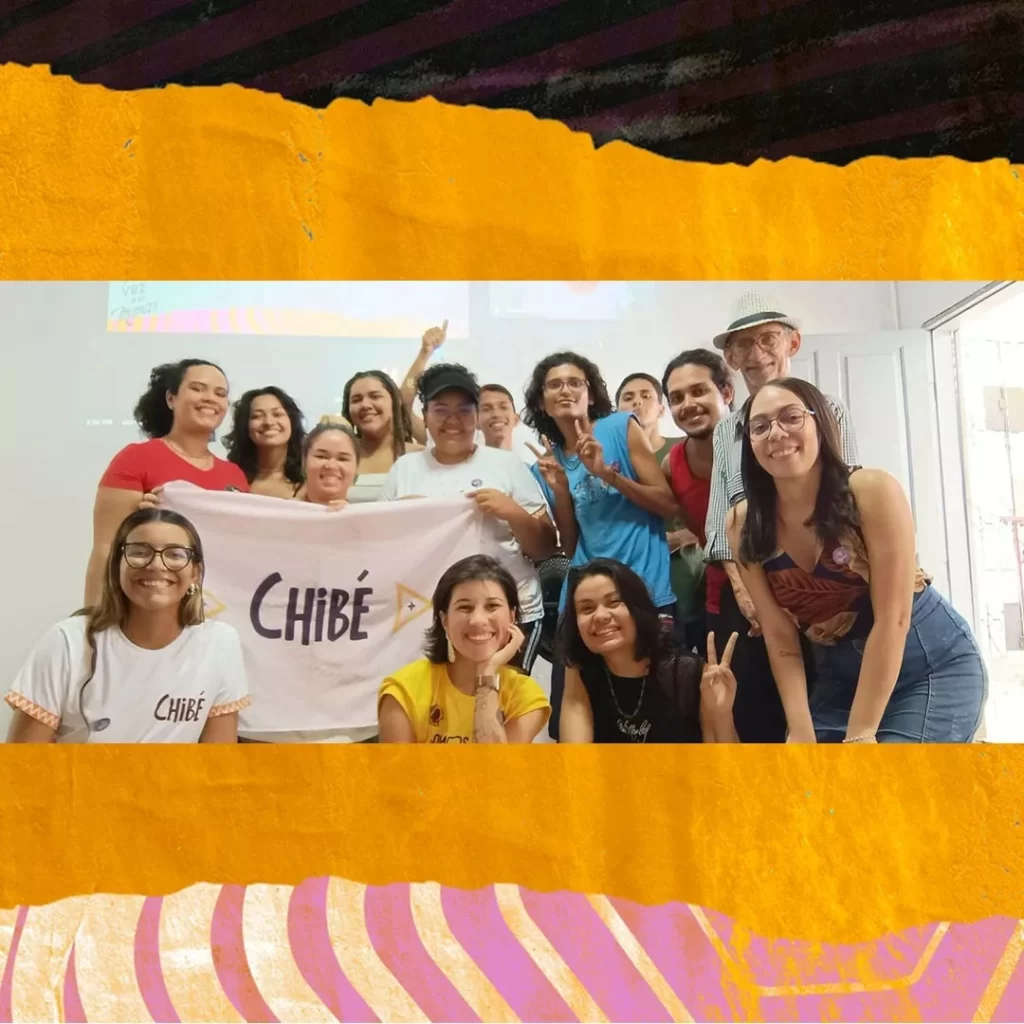
The project officially launched in 2020 and it originally began as a series of dialogue circles run by the Aurora Institute, which Michele founded in 2018 in Curitiba, southern Brazil. This concept was built through the observation of indigenous populations actually sitting in circles in order to resolve problems. Inspired by this collective problem-solving tradition, the dialogue circles sought to prioritize intersectionality and adaptability. Michele explained that the Institute reaches out to organizations already working with young people or representing certain social groups in an effort to make each session feel both reflective and empowering for the participants, as well as to allow them to express their concerns or questions in a familiar environment. “It is crucial to invest in regionalization,” she highlighted, “due to its beneficial role throughout the entire process.” People from different backgrounds and lived experiences are not inherently interested in the same issues. That is why the program provides flexibility and adaptability to scripts used during dialogue circles in an effort to better resonate with each distinct community.
So, who were they trying to reach? The team had decided that engaging with young and first-time voters presented a unique opportunity, who, unlike older voters had not yet developed long-established voting habits. Researcher Mulyawan observes that “first-time voters represent a unique demographic within the electorate and are often transitioning into adulthood, navigating their identities, beliefs, and responsibilities in the political realm.” These young citizens are still forming their democratic identities and do not usually rely on satisfaction/dissatisfaction with the incumbent government or party identification, even as the contexts and parameters that shape voter choices are vast.
This focus on emerging voters proved timely for the project. Data from Brazil’s electoral authority revealed rising disillusionment among youth. Many view voting as a pointless act as a result of the country’s systemic corruption, which makes political change seem impossible. However, this is not a unique case tailored to Brazilian youth. A global review by the Youth Democracy Cohort finds that young people increasingly avoid party membership and turn their backs in the ballot box during elections, not out of apathy, but due to the constant feeling of exclusion from meaningful decision-making – a key factor in forming engaged citizens in democratic societies.
While the context differs, the core concerns are echoed in Greece as well. A fraught political atmosphere marked the 2023 Greek national elections, following four years of governance that had sparked widespread dissatisfaction and anger – especially among younger voters. This disillusionment was reflected in a historically high abstention rate of 47,17% recorded in the snap election in June. While older age groups comprised the bulk of nonvoters, a survey from Kapa Research highlighted younger citizens’ low levels of trust in political institutions and revealed that a majority of both voters and abstainers believe that the country is heading in the wrong direction.
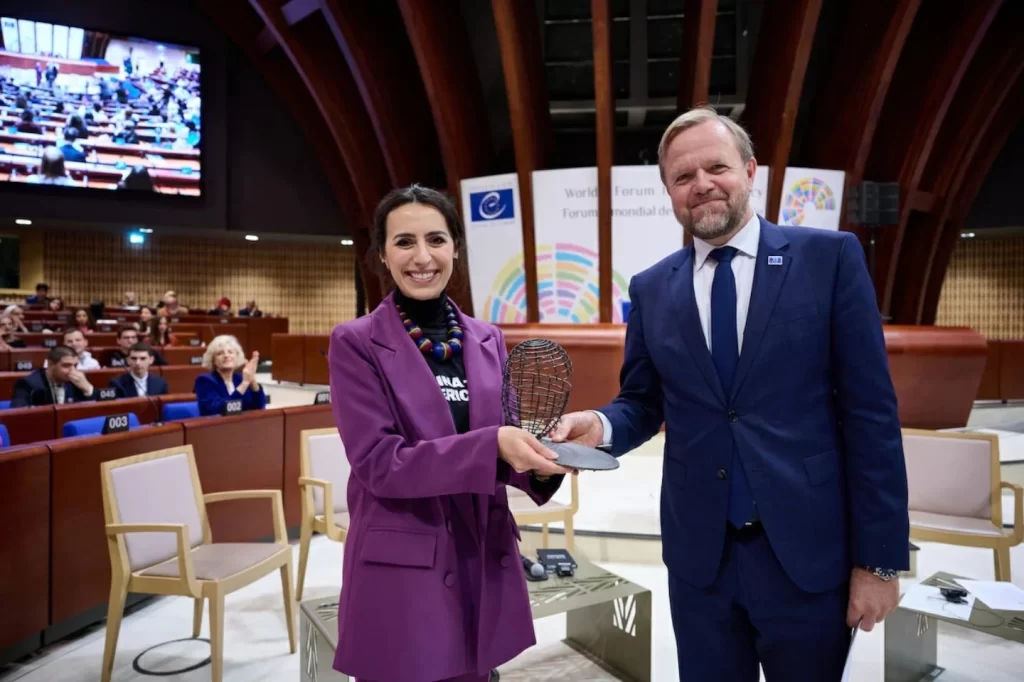
Against this global backdrop, the climate of disillusionment and civic despair in Brazil reinforced the urgency behind “My, Your, Our Vote.” Michele’s goal was not only to encourage participation but also to remind and instill in young minds that voting is a hard-won right and a powerful civic tool we use to change our reality. A right that holds great responsibility and carries the potential to create meaningful social change. This is why the project run through all three electoral years, in 2020, 2022 and 2024, partnering up with 24 organizations across the entire country, either as recipients of the dialogue circles or as strategic collaborators who helped expand its outreach and impact. This is a reminder of one of Michele’s core messages: collaborative action and collective responsibility. “We don’t just organize; we build together,” she said. Her commitment to collaborative action did not go unnoticed: in November 2024, Michele won the Democratic Innovation Award at the World Democracy Forum, hosted by the Council of Europe.
Insights from “My, Your, Our Vote” resonate beyond Brazil and could be utilized as tools for democratic progress in Greece. Between the last electoral cycle two years ago and the next one gradually approaching, it feels like the time to rethink how we reach and empower young Greek voters. Greece offers somewhat similar programs, such as the Youth Parliament – Steps of Democracy program that teaches high school students to become more familiar with the core principles of democracy, and even Local Youth Councils of municipalities or communities across the country. Such initiatives, despite providing spaces for younger minds to voice their concerns and participate in public matters, tend to reflect top-down structures rather than grassroots dynamics. What makes Michele’s work stand out, and perhaps reveals what is missing from current youth initiatives in Greece, is its deep authenticity and natural ease. From the very beginning of each session, a sense of trust and familiarity is established, allowing young people to be met where they are and spoken to as they are. Community-based organizations, universities, and other civil society actors in Greece could embrace a more bottom-up structure for related programs and create spaces that center on youth voices in a genuine way. Such initiatives could do more than just increase voter turnout; they could build up a generation that feels seen, heard, and politically empowered.
Sources
- Bacalso, C., Bárta, O., Moxon, D., & Kovačić, M. (2023). Youth political participation: Literature and policy review 1980–2023. People Dialogue and Change. https://youthdemocracycohort.com/stories/theme-2-youth-participation-in-voting-and-elections-youth-political-participation-literature-policy-review/
- Voter abstention in Greece: Comparative survey of voters and abstainers in the June 2023 national election. (2024, July). Heinrich Böll Foundation Greece. https://gr.boell.org/sites/default/files/2024-10/survey-on-abstention-july-2024_en.pdf
- Mulyawan, W., Rifai, R., & Hidayat, R. (2024). Factors influencing first-time voters’ turnout in the 2024 legislative elections: Political efficacy, campaign strategies, and financial incentives. The International Journal of Politics and Sociology Research, 12(2), 157-168.